


Corporate tax planning is the process of anticipating your company’s future tax needs to better align your tax decisions with your long-term business goals, while also minimizing your tax burden as much as possible.
Unlike tax preparation, which is the annual process of filing your taxes and staying compliant, tax planning is an ongoing process throughout the year. It requires you to remain proactive and organized, continually looking for opportunities to make tax decisions more efficient.
Corporate tax planning is all about strategy. Rather than focusing on the nitty-gritty details of deadlines and compliance, it functions as financial tax planning by looking two steps ahead at the bigger picture, asking questions like:
- How will business decisions we make now affect our taxes in the future?
- Is our business structured in the most tax-efficient way possible?
- How do taxes impact our long-term growth plans?
- Are there any deductions and credits we should be taking advantage of?
These questions matter. While many businesses tend to only think about taxes when deadlines approach, thinking strategically throughout the year can lead to long-lasting benefits and meaningful savings.
How Corporate Tax Planning Helps Your Business
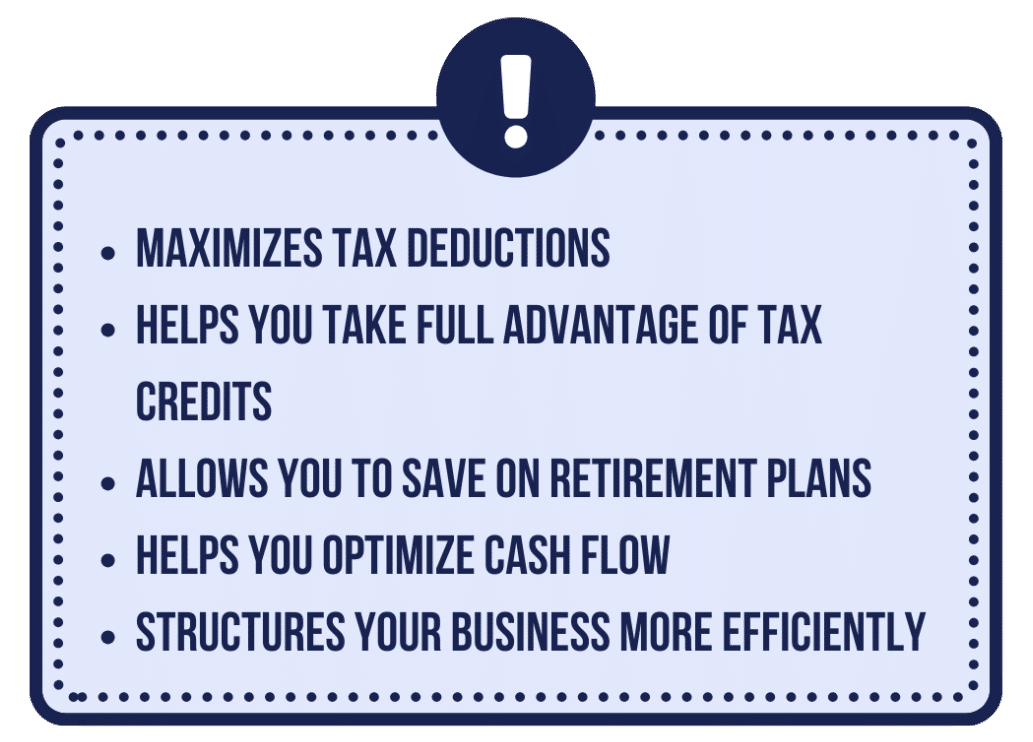
Maximizes Tax Deductions
Many businesses leave thousands of dollars on the table just because they’re not aware of what’s deductible. Some common deductible business expenses include:
- Office supplies and equipment
- Rent and utilities
- Travel costs, including vehicle expenses
- Professional services
- Employee training and education
- Marketing and promotional materials
- Insurance
- Meals with clients and entertainment like office parties
Deductions can be maximized by making intentional decisions about when and how you’re making certain purchases. For instance, if you need to purchase a large piece of equipment, doing so before the end of a very profitable year can help lower your taxable income.
Helps You Take Full Advantage of Tax Credits
Tax credits work differently than deductions. While deductions help reduce your taxable income, tax credits directly reduce the amount of tax you owe.
They’re a valuable tool when you’re crafting a tax strategy. But unfortunately, many businesses don’t take full advantage of them.
For instance, many companies don’t think they’re eligible for the R&D tax credit, assuming “research and development” applies only to companies making big scientific breakthroughs. But actually, the IRS defines this credit much more broadly. You may be missing out on claiming up to $500,000 in tax credits that you may be fully eligible for.
Understanding eligibility for tax credits can be complicated. Doing your research and working with financial experts can help you figure out what you’re actually qualified for.
Allows You to Save on Retirement Plans
Offering retirement plans isn’t just beneficial to attract and keep talented employees. Benefit packages can also help you save money on taxes by lowering your business expenses.
If you’re a small business offering a 401(k) plan for the first time, you can receive a three-year tax credit, covering up to 100% of the plan’s startup costs, depending on your company’s size. If you also add an auto-enrollment feature to your plan, you can claim an additional $500 per year.
If your company offers a matching program for employee contributions, this can also come with tax benefits for you. You can deduct your matching contributions on your federal tax return.
These federal tax credits are meant to help small businesses overcome the administrative fees and expenses that come with setting up a company-wide retirement plan.
Helps You Optimize Cash Flow
Cash flow is one of the most vital aspects of running a company. However, it’s also an area that many business owners struggle with.
Taxes are one of the largest and least flexible expenses that companies face all year long, yet many do not actively plan for them.
Effective tax planning helps you forecast all your tax liabilities, so there will never be any surprises. As well, it can help you time your income and expenses so you can manage your cash flow better from year to year.
For instance, if your company has had a highly profitable year, you may consider pre-paying for some future expenses now, or deferring some revenue to the next year. These strategies can help your business balance its liabilities more evenly from year to year.
Structures Your Business More Efficiently
All business structures are taxed differently. While the structure you initially chose may have made sense when you first started your company, it may not be the most efficient as you continue to grow.
For instance, if you’re currently running a sole proprietorship, you may be paying high self-employment taxes. As you continue to grow, it may make more sense to restructure to an LLC or S corporation in order to reduce your tax burden, as well as provide your company with more legal protections.
Structural changes have long-term implications not only for taxes, but also for compliance, ownership distribution and overall strategic direction. Taking the time to thoughtfully plan out a major change like this is essential.
Does My Business Need Corporate Tax Planning?
Running a business without a plan can be a dangerous and expensive game. If your business chooses not to engage in tax planning, you may end up:
- Overpaying taxes every year
- Experiencing cash flow issues
- Missing out on credits and other incentives
- Having stressful audits with tax authorities
- Feeling limited in your strategic potential
These costs may not become fully apparent until you’re struggling with finances and can’t pinpoint why.
The truth is, every business can benefit from tax planning strategies.
However, many businesses lack expert knowledge of tax credits and strategies. In addition, if you’re running a startup or small business, you may be working with a tight budget that doesn’t allow you to bring on a full-time CFO or accountant.
That’s where fractional bookkeeping and CFO services like Finvisor come in to help.
With services and pricing tailored to fit all businesses and budgets, you can get the support you need for corporate tax planning whenever you need it. Get in touch with us today.

Let's chat
Get on our calendar for a free introductory call.Find out what it's like to work with Finvisor and how we can help you reach your business goals. Our financial advisors work hard for your business across our full suite of accounting and reporting services.
Request a Quote
We'll get back to you within a business day, usually sooner. Or you can schedule an introductory call and get on our calendar."*" indicates required fields
