


As your company grows and evolves, so do its financial needs. To thrive in the long run, you require a strong grasp of financial strategy.
Are your financial resources strained or growing too complex for your current capabilities? Is it time for your company to bring in the expert help of a CPA or CFO?
Understanding these two roles and how they can serve your business is essential for every business owner, especially as your company grows and changes.
Let’s explore each role’s responsibilities in depth, when you might need to hire a CFO versus a CPA, and how they can work together to support your business at every stage.
What Is a CPA?
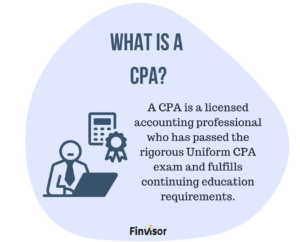
A Certified Public Accountant (CPA) is a licensed accounting professional who has passed the rigorous Uniform CPA exam and fulfills continuing education requirements.
In addition to passing the exam, CPAs must complete 150 credit hours of accounting education, usually through a degree in accounting, finance or business.
Additionally, they need to gain at least two years of experience as a public accountant.
CPAs are licensed and regulated by their state’s board of accountancy, which ensures they meet strict ethical and professional standards.
Thanks to their training and expertise, CPAs are highly valued professionals and are often assigned to executive roles like controller or CFO.
Key Responsibilities
CPAs are authorized to perform a wide range of accounting services, ranging from the preparation and examination of financial records to auditing and reviews.
Here are some of their key responsibilities:
- Compiling, reviewing and analyzing financial statements.
- Organizing and maintaining financial records and bookkeeping.
- Preparing and filing taxes, as well as offering tax planning advice and representing clients to the tax authorities.
- Conducting internal and external audits for financial record validation and identifying discrepancies.
- Providing financial consulting services and recommendations to assist with forecasting, budgeting and strategic planning.
- Maintaining regulatory compliance, including updating accounting practices to align with changing tax laws and accounting regulations.
When a CPA moves into an executive role, they take on responsibility for overseeing company finances and play a key role in guiding strategic business decisions.
Additionally, some CPAs specialize in the investigation of financial crimes like embezzlement or fraud and will work closely with law enforcement to reach resolutions.
When to Hire a CPA
There are many compelling reasons to hire a CPA.
Many business owners do so when they feel overwhelmed by financial management or need assistance with dealing with tax season. This is especially the case when help is required to unravel complex tax situations.
A CPA can also be invaluable during major business shifts, such as helping you set up a new division or create a separate business. They’re a great resource to have on your team when you plan to scale or grow, or if you are seeking a merger or acquisition.
If you are simply looking to secure additional investment to keep your business running smoothly, a CPA will prepare audited financials to present to lenders.
It’s also good practice to use a CPA for strategic financial advice. They can find ways to cut down on costs or take advantage of tax breaks that you otherwise would have missed.
What Is a CFO?
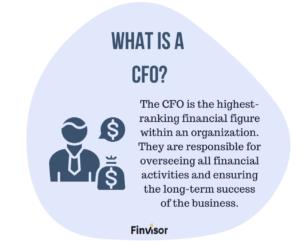
The Chief Financial Officer (CFO) is the highest-ranking financial figure within an organization. They are responsible for overseeing all financial activities and ensuring the long-term success of the business.
Unlike a CPA who focuses more on compliance and financial accuracy, a CFO is more involved with strategy, planning and leadership.
It’s true that the role of CPA and CFO can overlap somewhat, especially when a CPA has executive status within a company. As well, the role of CFO is a natural progression for a CPA, with many talented individuals taking on the position at some point in their career.
In addition to the CPA qualifications mentioned above, most CFOs hold advanced degrees such as a Master of Business Administration or a Master of Science in Finance. They also have extensive experience, often 10 or more years in a financial role.
Key Responsibilities
The CFO is responsible for leading a company’s finance and accounting teams, but that’s not all they do. Their key responsibilities are:
- Performing financial forecasting and modeling to assist with long-term planning, budgeting and so on.
- Identifying financial risk, performing risk assessments and implementing mitigation strategies.
- Completing financial and compliance reports to meet regulatory requirements.
- Managing the liquidity of the business, including cash flow and the allocation of capital.
- Helping raise capital and build investor relations by communicating financial performance and strategy.
- Advising the CEO and board members on investments, mergers, acquisitions, business planning and strategies.
- Overseeing and implementing financial systems to improve operations.
When to Hire a CFO
CFOs are typically required when a business reaches a level of growth or complexity that surpasses the current capabilities of its existing team.
For instance, if your organization is in a period of rapid growth, including expanding operations or penetrating new markets, a CFO can oversee the accompanying processes and complexities required to support the scaling efforts.
As a general rule of thumb, companies often hire a full-time CFO when their annual revenue reaches the $30 to $50 million mark.
Smaller companies can benefit from a part-time or fractional CFO from around the $1 million mark. This is especially true if the organization is backed by investors, or if it has complex financial requirements.
The expertise of a CFO is also invaluable during mergers and acquisitions, and for handling significant investments and fundraising efforts.
You should also consider a CFO if your business is facing financial challenges or a lack of direction and growth. For example, if you’re experiencing cash flow issues, a CFO can analyze the situation and implement strategies that will improve your financial health.
Do You Need a CPA, a CFO or Both?
Many business owners wonder what type of financial professional they need or if they will benefit from the services of both the CPA and the CFO.
In many cases though, the answer is not so clear-cut and depends on what stage the business is at, how complex its financials are and whether it is currently in a period of growth or expansion.
When a CPA Is Sufficient
For most small businesses, particularly ones in their early years, the services of a CPA are enough. This is because the financial processes are generally straightforward and can be easily handled by a CPA.
Other situations where a CPA is sufficient include:
- Routine compliance and financial reporting: If you simply need accurate bookkeeping and tax preparation, a CPA can ensure that your business complies with accounting standards and regulations.
- Audit readiness: If you’re facing an upcoming audit or want to ensure your business maintains audit readiness, a CPA is well-equipped to deal with this.
- Tax preparation and strategy: A CPA is able to assist you with tax preparation and filing. They can also advise you on tax-related matters, including finding ways to reduce your liability and uncover missed deductions or credits.
When a CFO Becomes Essential
As your business grows, it requires a financial team that is equipped to deal with the growing complexities that come with larger organizations. If, at any point, your CPA’s expertise can no longer match the demands of your business, it may be necessary to hire a CFO.
Here are some common scenarios where a CFO is required:
- Complex financial situations: If you require sophisticated financial modeling or detailed risk management, a CFO is the one for the job.
- Investor relations: Similarly, if you are struggling to secure investment or grow relations the way you want, a CFO can step in and take the reins.
- Strategic leadership: As your business scales, so will your financial team. At this point, it will likely be beneficial to have a CFO at the helm to guide your team in the right direction to better support growth.
- Major transitions: Companies that are fundraising, restructuring, launching an IPO, or facing a merger or acquisition need a CFO to manage relationships and plan strategically.
Why the Trend of Outsourced Fractional CFOs and CPAs Is Growing
Many smaller businesses need the expertise of both a CPA and a CFO, but not on a full-time basis. Hiring these roles in-house can be costly and often unnecessary, especially when resources are limited.
You may have realized this yourself. Your company could benefit from a CPA or a CFO from time to time, but you don’t really need one for the day-to-day running of your business.
Or perhaps you have enough work to sustain a part-time individual, but you don’t have the resources to fund it.
This is why outsourcing these roles is becoming so popular.
When you work with a part-time financial expert, your business will get the benefit of highly experienced individuals, without the cost of taking them on in-house. Outsourcing means you can scale services up and down as required, meaning you only pay for what you need, when you need it.
Only require a CPA for a few hours a week? Need a CFO to help you through a major transition? Both of these scenarios are possible through outsourcing.
This allows businesses of all sizes to get expert assistance for all financial matters, enabling them to grow and scale faster and more effectively.
How CPAs and CFOs Can Work Together in a Complementary Way
While the skill sets of the CFO and CPA are different, they certainly complement each other, and having both on board can strengthen your organization’s financial health.
The CPA’s role is primarily focused on ensuring a company’s financial information is accurate, compliant and optimized from a tax perspective. This historical data is essential for the CFO and forms a strong foundation with which to build upon.
The CFO can use that foundation to guide decisions and put long-term growth plans into place.
This division of labor balances the past with the future. The CPA concentrates on what has already happened and the CFO takes a forward-facing approach, using the data to decide where to take the business.
The CPA and CFO form a mutual reliance, and the business gains a powerful combination of financial discipline and strategic foresight.
How to Choose the Right Financial Expert
So, now that you know what each financial expert can do, how do you determine which one you need? The key is to evaluate your business and consider these factors:
Business Growth Stage
The main factor is where your business is in terms of growth:
- Startup and early stage: If you’re in the beginning stages of your business, then you will typically only need a CPA to set up your accounting processes, ensure you’re compliant and manage financial reporting and taxes.
- Growth stage: As your business becomes more complex, you will no doubt require a full-time CPA. A CFO may be required at certain stages to help with your strategies and financial planning.
- Mature organizations: Large, established businesses usually require ongoing support from a full-time CPA and CFO.
Financial Complexity
If your business has straightforward revenue streams and compliance obligations, a CPA is equipped to handle this alone.
However, for complex revenue models or scenarios such as international operations or multi-investor relationships, a CFO is generally required to keep everything in order.
Budget and Available Resources
Given their levels of experience, hiring a CPA is usually more affordable than taking on a CFO. You might pay a CPA hourly, whereas a CFO’s salary can be a significant investment of hundreds of thousands of dollars.
Yet, if a CFO is critical to developing a strategy that ensures business success, then the investment will be more than worthwhile.
Again, this is where outsourcing can prove beneficial. Rather than taking on all the associated costs of hiring full-time or part-time individuals in-house, you can access experienced professionals on an as-needed basis, avoiding a significant financial burden.
At Finvisor, we have years of experience and an amazing team of CFOs that can provide you with the expert guidance and skills that your business needs.
Our flexible plans are tailored precisely to your business needs, whether you’re looking for straightforward bookkeeping, access to accountants or full CFO services.
To understand more about outsourced financial professionals, get in touch with Finvisor for a free consultation.

Let's chat
Get on our calendar for a free introductory call.Find out what it's like to work with Finvisor and how we can help you reach your business goals. Our financial advisors work hard for your business across our full suite of accounting and reporting services.
Request a Quote
We'll get back to you within a business day, usually sooner. Or you can schedule an introductory call and get on our calendar."*" indicates required fields
