


Securing the necessary funding is a major win for any business. It means you’re financially secure enough to be trusted by investors who have faith in your company.
But even though you now have the funds you need, this is not a time to ease financial management. In fact, post-funding is where many startups and small businesses’ financial discipline is tested.
While the cash injection opens up opportunities, it also increases risk. Therefore, success lies in your ability to balance ambition with sustainable business cash flow management.
Let’s go into what that looks like in practice.
The Cash Flow Challenge After Funding
The funding round has closed, and your bank balance is looking great. You feel like you can breathe easier now.
While this shift from survival mode to growth mode may be freeing, it doesn’t mean you can fully relax financial control.
During that earlier phase, every expense is closely scrutinized and questioned as to whether or not it is necessary. And it’s precisely this discipline that secured you the funding in the first place.
Now is not the time to loosen the reins. On the contrary, your approach needs to be just as strict as it was before you received funding. If it’s not, you may just find yourself up against one of these pitfalls:
- Overestimating revenue growth: New funding often comes with aggressive growth targets, but how realistic are you actually being? Remember, scaling takes time. Assuming instant revenue increases can seriously hinder cash flow when your projections fall short.
- Expanding too fast: There’s no quicker way to burn through cash than by adding too many new hires and equipment purchases.
- Poor expense tracking: With multiple departments spending simultaneously, a lack of real-time visibility can cause overspending or missed cost overruns.
- Misaligned budgeting: If your spending isn’t linked to proper milestones or ROI targets, it’s easy to lose control of your burn rate.
In short, raising capital is only the beginning. You now need to switch from raising mode to managing mode. This way, you’ll ensure your cash flow is handled in a sustainable manner.
Create a Post-Funding Financial Plan
Once the money lands in your account, update your financial plan to account for it.
The goal isn’t just to track the new capital (although that’s part of it). Rather, the key aim is to understand how it interacts with other sources of cash inflow and how long it will sustain your business operations under different conditions.
Revisit Your Financial Model
The first step is to revisit and reconfigure your financial model. The version you used during fundraising was designed to attract investors by telling a compelling growth story and demonstrating potential returns.
Now, its purpose has shifted. It’s no longer a sales tool but a management tool. It must serve you in a way that enables real operational decisions that affect cash, hiring and long-term sustainability.
Start by updating your assumptions. Reassess your sales growth projections, cost structures and margins to reflect the new realities created by your funding.
This may involve expanded hiring plans, larger marketing budgets or upgraded technology. Adjust your forecasts for revenue, expenses and capital expenditure under different scenarios, from best case to conservative.
Next, build strategies enabled by the new capital directly into your operational plan. Incorporate initiatives that are now possible, such as entering new markets or accelerating product development. Be sure to tie each one to measurable goals and timelines.
Finally, run a sensitivity analysis to test how changes in key variables, like slower revenue growth or higher costs, impact your cash position.
Review your revised runway and liquidity under these assumptions. This will highlight potential vulnerabilities before they become real problems.
Set Up a 12–18 Month Runway Plan
Now that you have a complete picture of your cash sources, it’s time to create a detailed runway plan. Target a 12–18 month horizon that clearly shows how long your available funds will last under your current spending assumptions.
We recommend breaking your plan down into monthly intervals rather than quarters. This level of detail will help you catch potential cash flow shortfalls early and give you more flexibility to react accordingly.
Make sure you include fixed expenses like salaries and operational costs, as well as variable costs like marketing and production spend.
Another tip is to include a contingency buffer of at least 10–15%. This gives you breathing room if unexpected issues arise, such as delayed payments or rising supplier costs.
Align Spending with Milestones
Your investors provided funding with the expectation that you would use it to reach specific objectives, so it’s important not to lose sight of where you’re trying to go.
When drawing up your plans, incorporate these goals so that every major expense category is tied to a tangible outcome. This approach will ensure that the money is deployed in service of real progress and doesn’t get wasted on vanity projects.
Plus, it will make your investor updates a whole lot easier because you’ll be able to demonstrate exactly how and why the funding moved your business forward.
Use Rolling Forecasts
Rigid budgets don’t fit fast-growing businesses since circumstances can change in the blink of an eye.
Instead, adopt a rolling forecast model that updates projections regularly (ideally monthly or quarterly) as new data flows in.
This means you’ll need to consistently revise revenue estimates based on actual performance and reallocate funds toward higher ROI initiatives as priorities shift.
This is the key to staying agile, especially when market conditions get challenging.
Control Burn Rate Without Slowing Growth
Burn rate is the speed at which you’re spending your cash. It is one of the most critical post-funding metrics, and investors expect you to closely track it. It’s the main factor that determines how long your runway is likely to last before you need more funding.
To control burn rate without stalling growth, you must prioritize expenses that directly drive a measurable ROI, such as activities that contribute to customer acquisition or product improvement.
Additionally, take time to evaluate recurring costs like subscriptions, software and contractors to see how much they contribute to your burn rate. Then, scale back or renegotiate costs as needed.
Scenario planning is essential for controlling your burn rate. For instance, you could use it to anticipate the impact of a 20% drop in sales and prepare contingency plans like cost adjustments. This approach allows you to extend your runway without hindering growth.
Strengthen Financial Systems and Oversight
There’s no way around it: modern businesses need modern tools and services to maintain a healthy cash flow.
The period immediately after funding is the ideal time to reassess how you manage your finances as a whole. After all, you can’t successfully manage your finances if you don’t have proper insight into all your assets.
To get your financial systems up to scratch, we recommend that you:
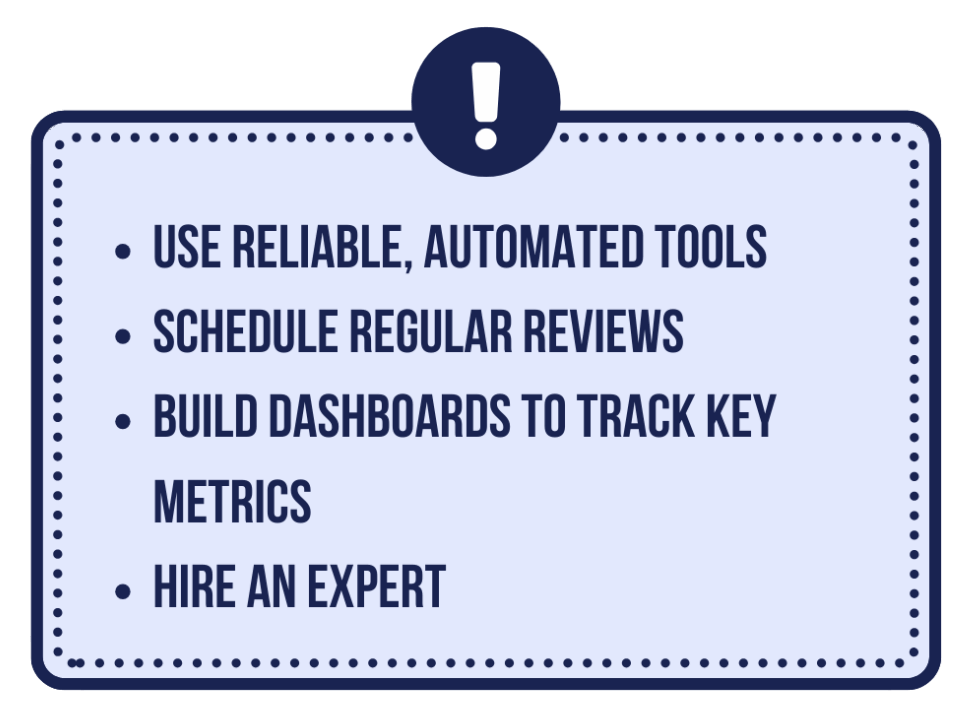
Use Reliable, Automated Tools
Manual spreadsheets and physical ledgers are notoriously unreliable, not to mention labor-intensive. Invest in proper accounting and reporting software like QuickBooks or Xero.
These tools combine expense management and payroll with automation to keep your financial records accurate and up to date.
Schedule Regular Reviews
Look at your cash flow frequently. Weekly or bi-weekly reviews help you monitor liquidity and spending.
By doing this, you’ll catch issues early, allowing you to rectify any problems before they spiral out of control.
Build Dashboards to Track Key Metrics
Develop dashboards that keep cash flow and liquidity front and center. Your dashboards should also display revenue, expenses and operational KPIs to ensure you get the full picture at a glance.
Without dashboards, you can’t make quick decisions or support proactive financial management, so make these a priority.
If you’re not sure how to build dashboards, hire an expert to do it for you. Alternatively, the accounting tools mentioned previously have the features to create customized dashboard views.
Hire an Expert
You probably didn’t set up your business with the expectation that you’d have to act as a financial expert too. There’s really no need to try and fulfill this role yourself, especially when there are so many ways to get professional support.
For example, hiring a fractional CFO will bring you strategic financial oversight without the full-time costs of employing one directly.
At Finvisor, we offer such services and will match you with a fractional CFO who has direct experience within your industry. They can advise during all stages of funding, from application to optimizing post-funding planning.
Plus, the right expert will help you create investor-ready reports and show you how to better manage your cash flow, while keeping risk as low as possible.
Communicate with Investors and Teams
Investors don’t want radio silence once their money is in your hands. They expect regular updates on your cash flow position, remaining runway and progress against your goals.
Even when things aren’t going to plan, transparency is essential. Be honest about any issues and how you intend to overcome them.
This demonstrates that you are a mature leader and helps increase trust. It can also unlock valuable investor guidance and support, helping you solve problems as they arise.
Good communication doesn’t begin and end with investors. Each of your business departments should understand how spending is tied to overall cash flow objectives.
Meet with leaders regularly to discuss spending. Collectively, look at how processes can be adjusted to ensure every department’s needs are met without increasing the burn rate.
Invest Strategically, Not Emotionally
One of the biggest errors we see founders make is leading with their heart rather than their head.
But the truth is, making quick decisions because it “feels right” or “you only live once” rarely produces consistent returns.
If you feel yourself being led by emotion, stop! Take a moment and ask yourself the following:
- Does the decision directly contribute to reaching the company’s goals?
- Am I making this decision purely in response to my competitor’s actions?
- Have I validated the idea by running tests and assumptions?
Your answers to these questions will quickly reveal if you are making a strategic or emotionally-charged decision.
Monitor, Adjust and Plan for the Next Round
It may seem like you have plenty of time between your most recent funding round and the next. But you need to stay on the ball and make sure you’re in a good position to secure future rounds.
The upshot is, the way you manage your cash right now has a direct impact on your ability to raise cash tomorrow.
Here’s some of our best advice to plan properly:
- Leverage real-time cash flow insights. They’ll help guide your decision-making. This is where those dashboards you created will prove their worth, because they enable you to spot both positive and negative trends early on.
- Watch out for early warning signs. Monitor for signs that things aren’t as healthy as they seem. Look for delayed invoices, overspending and growing accounts receivable.
- Keep all your financial documentation up to date and investor-ready. Monthly reports, analysis and projections must be accurate and up to date, so you’re prepared before you even need to request funding.
- Make your funding request early. The best time to raise is long before you’ve run out of existing funds because it shows you can maintain financial discipline. Plus, this way you’ll present yourself as a lower-risk option to investors.
Final Thoughts
Don’t let cash flow define how you operate your business. Make it a tool, not a constraint.
When you understand where your money is coming from, where it’s going and how it’s working for you, you gain proper control.
The difference between companies that grow after funding and the ones that don’t isn’t down to luck. It’s down to strong discipline and controlled management strategies.
If you’d like more information on how fractional CFO and accounting services can help you better manage your funding and cash flow, we invite you to get in touch with Finvisor.
Our experts are always willing to have a conversation with you to discuss what type of financial support would benefit you the most.

Let's chat
Get on our calendar for a free introductory call.Find out what it's like to work with Finvisor and how we can help you reach your business goals. Our financial advisors work hard for your business across our full suite of accounting and reporting services.
Request a Quote
We'll get back to you within a business day, usually sooner. Or you can schedule an introductory call and get on our calendar."*" indicates required fields
